generated Chatgpt
Cross-Border Tokenization: A Microservices Architecture for Trade Finance
Tired of trade finance breaking down at borders? Discover a microservices architecture that tokenizes claims, isolates transactions from regulatory shocks, and automates compliance without sacrificing legal enforceability.

Cross-Border Tokenization: A Microservices Architecture for Trade Finance
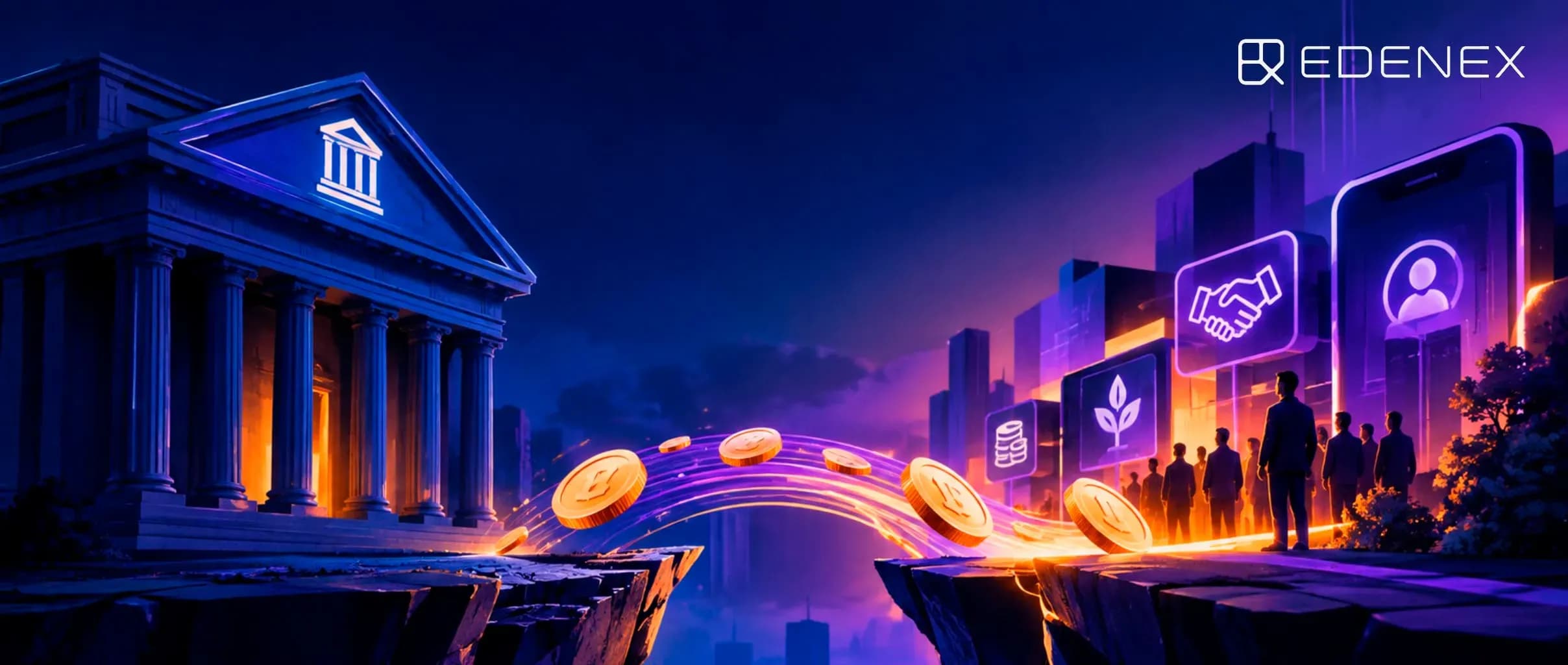
The political landscape of recent years has turned global trade into a fascinating game of "minefield." Divergences in sanctions regimes, KYC/KYB requirements, and export controls make the same foreign trade transaction permissible in one jurisdiction and "toxic" in another. Conservative procedures do not always allow for rapid adaptation to conflicting requirements, leading to delays and rising compliance costs.
Battering down the closed doors of traditional banking is a strategy for enthusiasts; it is worth considering alternative solutions, but soberly and meticulously, without excessive hype. But also without blanket skepticism—many did not believe in cryptocurrencies either, and now that market has long surpassed $2 trillion.
Why Does TradFi Break Down in Foreign Trade?
The classical TradFi model scales poorly for cross-border shipments with medium ticket sizes, short timeframes, and high documentary burdens. It contains too many manual links: contract verification, invoice reconciliation, shipment confirmation, counterparty compliance, insurance coordination, collateral registration, and payment control. Each stage lives in a separate process, often with a separate provider, and is not linked to the others within a unified operational framework.
The situation is further complicated by the fact that regulatory requirements for such transactions change radically from jurisdiction to jurisdiction. Moreover, these requirements often become instruments of political influence, subject to sudden changes due to sanctions policies or trade wars. As a result, a bank or fintech provider is forced to adapt to a "patchwork quilt" of compliance rules, making automation of cross-border flows nearly impossible without deep integration with the legal databases of specific countries.
Because of this, a transaction fragments into a set of unsynchronized entities: the commercial contract separately, the bank limit separately, documents separately, insurance separately, settlement separately. The bank is forced to hold risk and operational load within its own balance sheet and infrastructure, rather than within the structure of the transaction itself. For foreign trade, this means a long time-to-fund, high servicing costs, and dependence on large standardized cases.
An additional problem is the lack of real-time transparency regarding transaction status. Participants often see only fragments: whether the goods have been shipped, whether the invoice has been accepted, whether confirmation has been received, whether insurance coverage has been activated, and where the payment cycle stands. When discrepancies arise between documents, logistics, and cash flow, manual reconciliation work begins—and that does not scale well across international jurisdictions.
Tokenization of Rights
So, suppose we do not follow the path of an ordinary investment fund or brokerage account. Our task is to create for each specific transaction a digital infrastructure where everything—from the contract to the disbursement of funds—is isolated from external risks and operates under clear rules.
At the core of the alternative model lie RWA (Real World Assets). These are not only physical objects such as real estate or commodities but also financial obligations: invoices, accounts receivable, and claims. RWA make it possible to convert an economically significant asset into digital form while preserving its legal connection to the real world. According to RWA.xyz, as of July 2026, the RWA market stands at approximately $36.72 billion.
In this case, the focus is on commodity shipments and the corresponding claims. Paper contracts and shipping documents become structured digital assets. They can be efficiently managed, recorded, and transferred to counterparties within a clearly defined financing model.
The closest domestic equivalent to RWA can be called digital financial assets (DFAs). However, they are not the same thing: DFAs represent a regulatory form of rights circulation, whereas RWA represent a broader international concept. An RWA architecture may utilize DFA logic, but it is more flexible and depends on the type of right being tokenized.
Why is this needed? Traditional financing depends on the overall rating and balance sheet of a company. In the RWA model, the focus shifts to the transaction itself. Tokenization is not pursued for its own sake, but for accurate accounting of shares, transfer of rights, buyer verification, and settlement automation. In other words, a token here is an interface between a legal obligation and settlement logic, rather than a standalone asset detached from the transaction.
Blockchain Again? Yes, Blockchain Again.
Why blockchain here? Blockchain serves as a single immutable layer of record-keeping and coordination. First, it provides transparency of transaction statuses. Second, it enables automated payouts via smart contracts without manual intervention. Third, it makes participation rights transferable: a tokenized share can be recorded and realized among permissible buyers.
RWA and blockchain address different tasks. RWA defines which specific asset is tokenized—goods, invoice, or obligation. Blockchain, in turn, handles the fixation of that right and its movement. The technology does not replace law or accounting but creates a layer compatible with automated transaction execution.
The token in this model does not represent the goods and does not claim to be a digital equivalent of cargo. It records the right to participate in future payouts according to a pre-defined structure. The legal enforceability of this right does not live within the token by itself—it is ensured by an external perimeter that ties the digital record to an actual legal obligation.
Alternative Model: A Tokenization Marketplace
An alternative model to classical TradFi in foreign trade can be a tokenization marketplace, underpinned by blockchain and RWA.
Classical trade finance is almost closed to private investors. High investment thresholds, complex document verification, and difficulties in rights transfer cut off most participants. In the new model, this problem is solved not by promises of universal accessibility, but by pre-defined rules for admission, transfer, and exit from a transaction.
The first level is participant screening. An investor does not receive general access but undergoes verification against requirements based on country, status, and permissible risks. On the secondary market, a token can only be transferred to an approved buyer who has passed the same checks. This reduces legal risks but makes the market accessible only to "insider" participants.
The second level is restrictions on asset transfer. A token confirming a payout right cannot be freely sold like an ordinary cryptocurrency. It is subject to rules: transfer prohibitions, temporary lockups, or buyer citizenship restrictions. The stricter the control rules, the narrower the pool of potential buyers, so digitalization does not guarantee automatic trading.
The third level is organization of the secondary market. An exchange model is not suitable here, as payouts depend on specific shipments and documents. Direct deals between verified investors or closed platforms work better. If the rights transfer mechanism is not thought through at the outset, the secondary market will remain technically possible but effectively empty.
Economically, this approach solves two tasks. First, it lowers the entry barrier: a payout right can be split into small fractions. Second, an investor gains a clear way to exit a transaction under pre-defined rules. This is important for short-term operations, where a participant needs not just to hold an asset but to clearly understand the timing and conditions for its sale.
Microservices Architecture
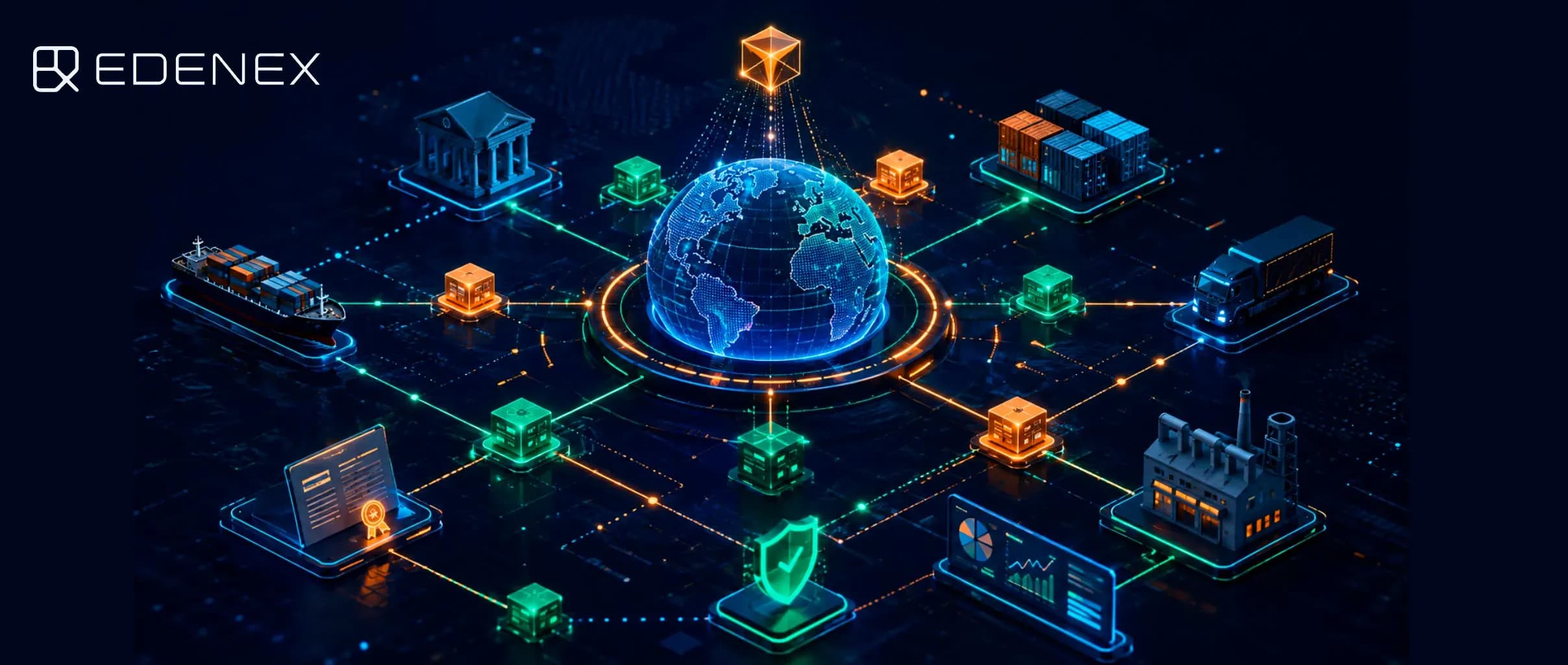
The alternative model for working with assets is not a single platform but a suite of specialized services. For their implementation, a microservices architecture is best suited, where each function (document verification, payments, rights record-keeping) is isolated in a separate module. Such a system operates as a unified mechanism, delivering accuracy and reliability unattainable in fragmented traditional processes.
The participant verification service collects data on companies, beneficial owners, country of registration, and sanctions risks. Here, the system checks whether an investor is entitled to work with a specific instrument. Without this stage, converting rights into digital form loses meaning, as the asset becomes legally unenforceable.
The document and trade data verification service stores contracts, invoices, waybills, and insurance policies, cross-checking them against each other. It detects mismatches in amounts, dates, or shipment routes. This eliminates the main drawback of traditional financing—the gap between the paper document and the actual trade event.
The rule enforcement and legal compliance service automatically blocks operations that fail checks against security rules or regulatory requirements. Fund transfers are possible only after the system issues clearance. This allows for legal compliance without slowing down processes through manual approvals.
The risk calculation service converts data on routes, insurance, and transaction history into financial metrics. The system calculates yield, limits, and payout priority. At this level, the economic logic of the transaction is embedded, transforming it from an abstract idea into a structured financial product.
The legal wrapper management service records ownership rights, restrictions, and transfer prohibitions. This layer operates independently of the blockchain, enabling the system to function across different legal frameworks. Blockchain here serves merely as a convenient data display layer, while the primary legal information resides in the registry.
The digital record issuance service creates a token only after the transaction has passed all checks. This is not merely a coin issuance but a binding of a digital record to a specific shipment and investor share. If legal requirements are not met, issuing the asset is technically impossible.
The funds custody and payment channel service directs investor money through licensed intermediaries, bypassing the platform's own balance sheet. The system merely links incoming funds to a specific transaction. Capital flows here are always strictly tied to legal ownership rights.
The automatic settlement service completes the loop. It tracks payments from the goods buyer and distributes them among investors according to the payout waterfall. This is a complex process with checks and event monitoring. If a payment is delayed, the system transitions into a recovery mode, maintaining the link between all legal and financial data.
Conclusion
Traditional banking is still trying to play by the rules of the past, but the world of foreign trade is currently not conducive to that. There is now both a situational necessity and a technological capability to build foreign trade on different principles.
The point of the alternative approach is not to "wrap everything in blockchain," but to finally stop evaluating a company as a whole and instead focus on a specific shipment.
Tokenization does not eliminate lawyers or due diligence checks, as crypto-anarchists dream—however, it is a way to solve some of the political problems of foreign trade through technological means.