generated Chatgpt
Financing Transport in 2026: RWA Tokenization of Waybills as a Solution to the Liquidity Crisis in Logistics and Freight
The 2026 liquidity crisis: 90% of fleets under lease, 6.7k carrier bankruptcies, and tightening bank rates. We explain how tokenization of waybills (RWA) resolves cash flow gaps within 24–48 hours without collateral.

Transport Financing: Trends in Freight Transportation and Logistics
The 2026 liquidity crisis: 90% of fleets under lease, 6.7k carrier bankruptcies, and tightening bank rates. We explain how tokenization of waybills (RWA) resolves cash flow gaps within 24–48 hours without collateral.
The global freight transport sector — road, maritime, and multimodal — has been operating at the edge of operating profitability throughout the first half of 2026. According to industry monitoring data, the cost per kilometer in the Russian road segment has reached RUB 85, against a weighted average tariff of RUB 74.7.
The reconfiguration of global trade corridors and rising fuel costs are compounded by a structural driver shortage and monetary policy tightening. The number of transport companies in Russia undergoing bankruptcy or liquidation exceeds 6.7 thousand, with industry experts forecasting the exit of at least another 7% of players by year-end.
The central paradox of 2026 is that physical freight volumes demonstrate inertial growth (driven by supply chain reconfiguration), yet the financial sustainability of carriers is under existential threat.
Traditional financial institutions (TradFi), faced with growing inventories of repossessed leased equipment (monthly stock growth of 20%, with total repossessions estimated at 90 thousand units), have tightened underwriting standards. This has triggered a chronic working capital deficit in a sector where up to 90% of fleets are under lease, and free cash flows are virtually nonexistent.
Anatomy of the Financial Crisis in Logistics: Why Standard Loans Are Ineffective
Conventional bank lending products are inapplicable to the current operating model of carriers for three fundamental reasons:
Payments Deterioration. Major shippers (retail, FMCG, manufacturing) impose freight payment deferral terms in the range of 60–120 days. At the same time, the carrier must bear operating expenses (fuel, wages, road tolls, lease payments) in real time. This creates a liquidity "dead zone," where the receivable for services already rendered is not backed by actual cash flow.
Cash Flow Gaps and the Domino Effect. A delayed payment for a single trip from a large forwarder blocks the ability to refuel 10–15 trucks of a subcontractor. For small and medium-sized enterprises (SMEs), a single frozen payment triggers a chain reaction: inability to make a lease installment → risk of tractor repossession → loss of contract.
Stringency of Bank Filters. Classic factoring is unavailable to 80% of mid-tier carriers. Banks require complex paper-based underwriting, prolonged verification of the authenticity of consignment notes (CMR), and apply steep discounts for cross-border risks. Banks have tightened their credit policies, rendering working capital lending unprofitable for a sector with volatile margins.
Evolution of Instruments: From Classical Leasing to Supply Chain Finance (SCF)
The response to TradFi rigidity has been the transformation of financing instruments themselves:
Leasing Transformation. The sector is shifting from standard finance leasing to operating leasing and the Pay-per-Mile model. This enables transport companies to avoid inflating capital expenditures (CapEx) and to link financing costs to actual mileage, thereby preserving liquidity during idle periods.
Reverse Factoring in SCF. Major logistics providers are implementing Supply Chain Finance programs to support subcontractors.
Example: integration of JP Morgan solutions into the Oracle ecosystem for FedEx. The forwarder leverages its high investment-grade rating to open cheaper credit lines for small carriers, automating processes within ERP systems.
Tokenization of Waybills (RWA) and Digital Clearing
The most radical shift in 2026 is the transformation of transport documents into liquid digital assets:
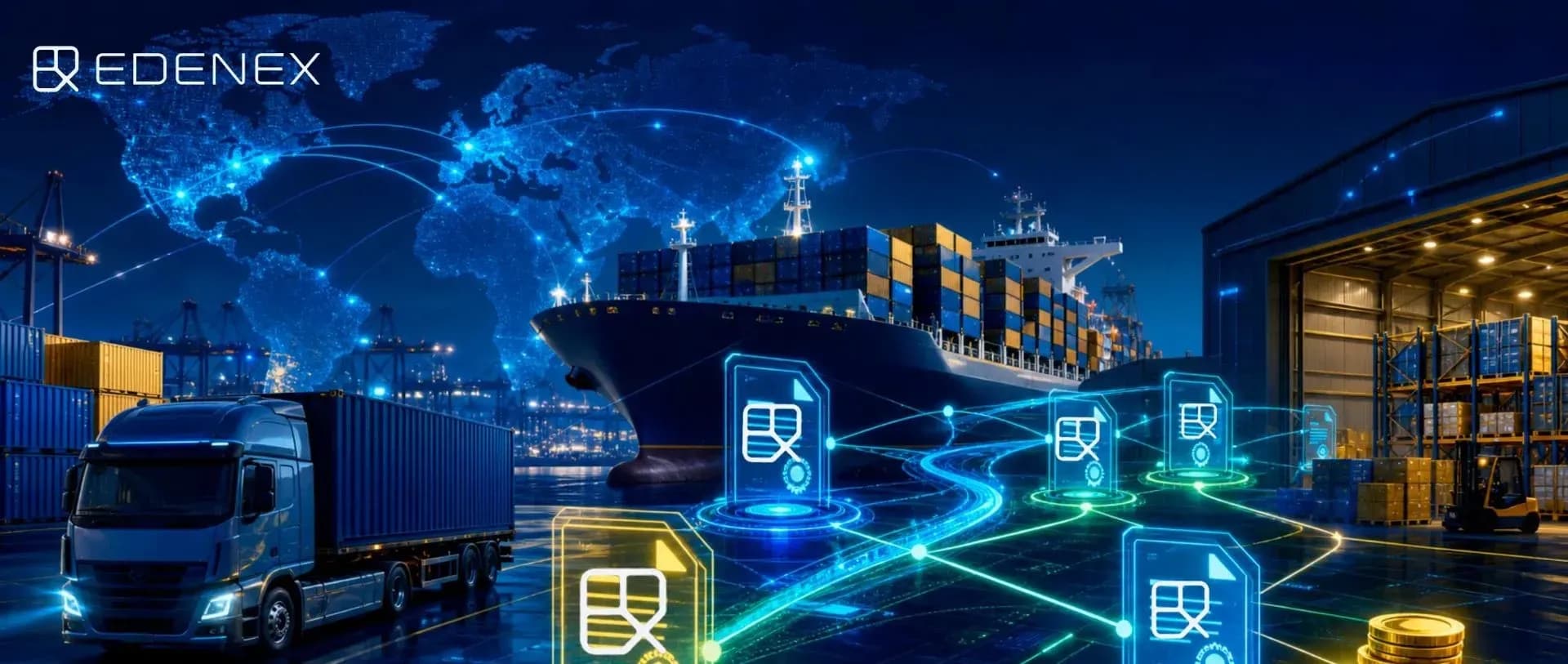
Electronic Bill of Lading (eBL) and e-CMR as Collateral. Digitized transport documents (in accordance with the UNECE e-CMR protocol) are becoming real-world assets (RWA) on the blockchain. A tokenized waybill, confirming the fact of cargo acceptance, is treated by investors as an unconditional right of claim. This allows capital from private credit funds to be channeled into the carrier's working capital.
Instant Settlement (T+0). Smart contracts are integrated with truck GPS trackers. As soon as the oracle confirms the fact of delivery (Proof of Delivery) at the consignee's warehouse, the smart contract automatically releases payment to the carrier, net of a minimal financing fee. Digital clearing eliminates human error and accounting delays.
| Criterion | Traditional Bank Factoring | Classical Reverse SCF | Digital Financing (RWA Tokenization of Waybills) |
|---|---|---|---|
| Speed of Capital Access | 5–10 business days (prolonged CMR verification) | 3–5 days (within the approved buyer credit limit) | 24–48 hours (upon verification of Proof of Delivery) |
| Cost of Funding | High (discount 15–25% p.a. + fees) | Medium (linked to the large buyer's credit rating) | Competitive (institutional capital secured by RWA) |
| Collateral Requirements | Stringent (additional guarantees, receivables insurance required) | Low (secured by the buyer's rating) | None (secured by RWA token, isolated in an SPV) |
| Dependence on Bank Compliance | Critical (manual scoring, AML) | Significant (buyer due diligence) | Minimal (automated screening, sanctions control) |
| Operational Burden on Accounting | Extreme (paper document flow, registers) | High (data export to the SCF system) | Zero (automatic reconciliation via smart contract and oracles) |
Edenex Infrastructure Solutions for the Logistics Sector
In 2026, the velocity of capital must match the speed of freight delivery. Slow banking rails are hindering global supply chains. The Edenex platform addresses the structural liquidity deficit through tokenization of waybills and freight contracts.
Edenex's architecture provides for the isolation of each asset in a special-purpose vehicle (SPV), which protects investors from carrier bankruptcy risks. Smart contracts link document flow (e-CMR) with payments, unlocking access to global pools of institutional-grade alternative capital. Eliminate cash flow gaps within 24–48 hours and scale your fleet without onerous banking conditions.
[Button: Obtain Financing Against Transport Contracts]
FAQ
How does an electronic consignment note (e-CMR) protect the investor against the risk of fraud and double financing of a single trip?
An e-CMR registered in a distributed ledger ensures data immutability and message integrity. Each waybill is assigned a unique cryptographic identifier. The platform's smart contract verifies, via the registry API, that no prior financing has been extended for that trip. The SPV structure guarantees that the asset is not duplicated on the carrier's balance sheet as collateral for other creditors.
Can an independent carrier with a fleet of up to 10 vehicles obtain alternative financing via an RWA platform?
Yes. The digital platform automates 80% of initial counterparty verification and compliance screening, lowering the entry threshold for SMEs. Unlike banks, which exclude small businesses due to the high cost of manual underwriting, tokenization enables the aggregation of small claims into pools for institutional investors without requiring an individual credit committee for each trip.
How are fluctuations in fuel costs accounted for in smart contracts for long-term logistics financing?
Smart contracts may incorporate fuel price oracles (e.g., Platts indices or exchange quotes). If the fuel price exceeds a preset threshold, the smart contract automatically recalculates the financing amount or adjusts margin requirements on the collateral. This hedges risks both for the carrier (preventing a cash flow gap) and for the investor (preserving the integrity of the collateral).