generated gpt
Recourse and Non-Recourse Factoring: Automated Underwriting in the Digital Environment
Real-time data, API integrations, and tokenized assets are transforming factoring. Discover how automated underwriting is redefining recourse and non-recourse models in 2026 — cutting approval times from days to hours and unlocking working capital for thousands of businesses.

By 2026, classical factoring with manual document verification and week-long limit approval waits has become definitively obsolete. Instead, a different model is being used: banks and factors are increasingly connecting to corporate ERP systems via API.
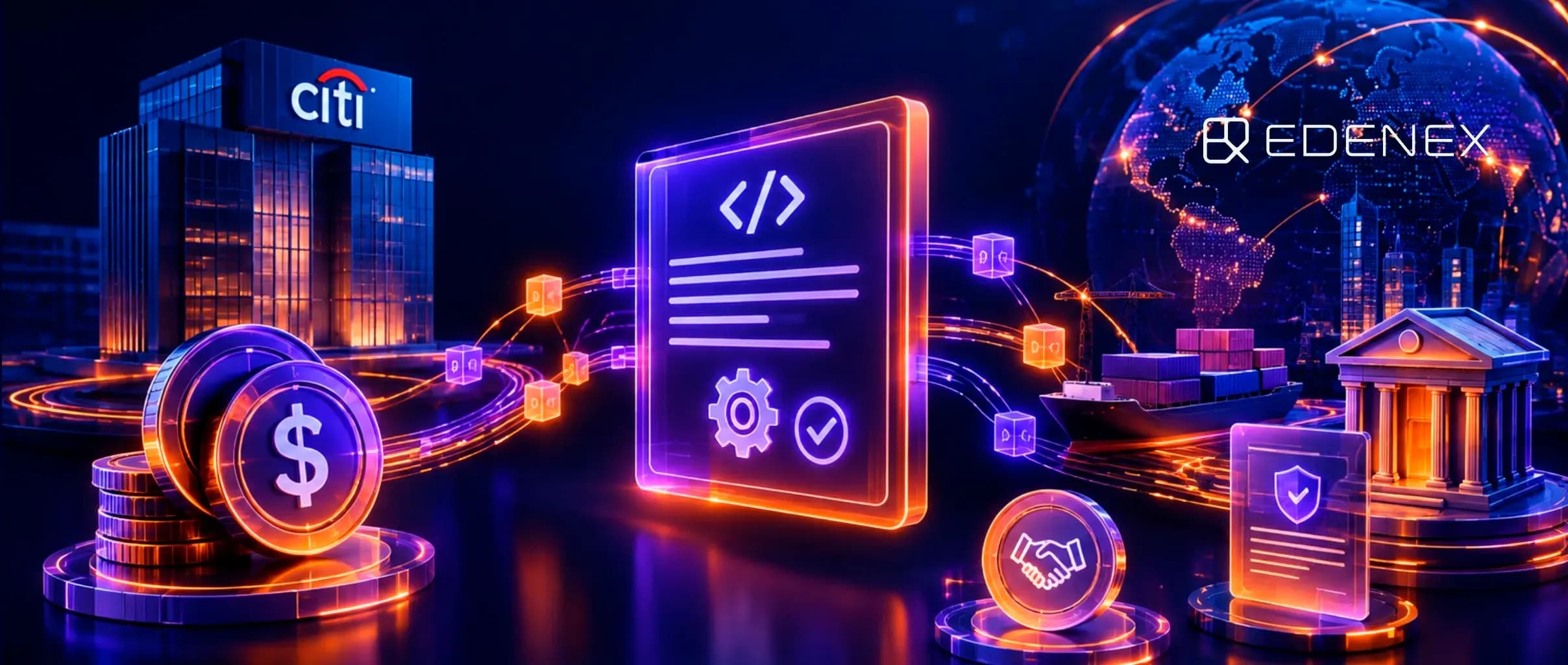
For example, Citi has created solutions that allow corporate ERP systems to connect to banking platforms for payment automation and liquidity management. Kyriba, a leading provider of corporate treasury solutions, offers ready-made integrations with SAP, Oracle, and NetSuite via API. This reduces implementation time from 6–12 months to several weeks and cuts integration costs by 80%.
The trade finance market is transitioning to an on-chain environment where data is analyzed in real time. Protocols such as Centrifuge enable invoice tokenization, placement into on-chain pools, and capital raising from investors. Smart contracts automate capital movement and income distribution, delivering 6–10% annual returns to investors.
The essence of digital transformation is the elimination of information asymmetry. This refers to the situation where the seller or borrower knows more about the quality of the transaction than the bank. As a Stanford Graduate School of Business study notes, this creates a fundamental problem in trade finance. When a factor or investor gains access to real-time data on the debtor's payment discipline, they can more accurately assess the probability of default.
Automated systems and FinTech solutions that accelerate information transfer and verification help reduce asymmetry and increase lending efficiency. Joanna Hill, Deputy Director-General of the WTO, believes that information asymmetry and high transaction costs are at the root of the SME financing access problem. Digital innovations offer a path to lowering these barriers.
Recourse and Non-Recourse Factoring: Risk Distribution in the New Paradigm
In classical recourse factoring, the risk of non-payment remains with the supplier: if the buyer does not pay, the factor reclaims the funds from the seller. In non-recourse factoring, the risk transfers to the factor, but this comes at a higher cost — rates are 1–2% higher.
By 2026, the landscape has changed: digital scoring and real-time data analytics have enabled factors to assess risks more accurately. As a result, non-recourse transactions are showing the highest growth. According to Bonafide Research, the non-recourse segment in the U.S. is growing at 9.9% annually. This is significantly higher than the overall U.S. factoring market growth rate of 8.73%.
Non-recourse factoring is particularly in demand in industries with long payment cycles — for example, healthcare, where suppliers wait 60–120 days for payment from insurance companies. Overall, recourse factoring still dominates, accounting for approximately 77% of the U.S. market, but it is non-recourse schemes that are driving the primary growth. This has become possible thanks to automation.
As a result, default prediction accuracy has increased, risks have been reduced, and non-recourse factoring has become more accessible to a larger number of companies.
Automated Underwriting Architecture
Real-time data collection. Instead of waiting for a quarterly report in PDF format, scoring algorithms connect directly to corporate management systems (SAP, Oracle), tax registers, and banking interfaces via API. This allows risk assessment based on current rather than outdated data.
Behavioral scoring. The system evaluates a company's financial indicators and its payment discipline in real time — how often the debtor delays payment, whether there are hidden delay patterns. This is not visible in static reporting but is evident in transaction history.
Dynamic pricing. The lending rate is not fixed for a year. Smart contracts adjust the discount cost for each invoice depending on the debtor's current financial condition: the higher the risk, the higher the rate.
Tokenization of Accounts Receivable (RWA)
Tokenization technology enables the digitization of claims. Instead of a paper invoice, a digital token is used that records all transaction parameters: amount, terms, buyer, and payment conditions. In non-recourse factoring, investors purchase such a token and see its scoring score — a risk assessment calculated by an algorithm based on real data on the debtor's payment discipline.
The entire tokenized real-world assets market reached approximately $60 billion in 2026, according to KuCoin exchange data. From January to May 2026, active RWA volume more than doubled — from $5.4 billion to $11.2 billion. We are observing high-growth market momentum.
Also important is the automation of waterfall payments. If the debtor pays the invoice, the smart contract instantly distributes funds among the pool of investors — first repaying the principal, then interest, and the remaining margin is shared among participants. In the event of a debtor default in a recourse transaction, the algorithm automatically writes off compensation from the supplier's reserve wallet.
This eliminates manual involvement by bank clerks and reduces settlement time from weeks to minutes, eliminating cash flow gaps. According to Chainlink, traditional factoring requires 2–3 days just for application approval. On-chain factoring shortens this process to 30 seconds through automated verification.
| Criterion | Traditional Recourse Factoring (TradFi) | Digital Recourse Factoring | Digital Non-Recourse Factoring (RWA) |
|---|---|---|---|
| Decision speed | Days–weeks (manual verification) | Hours (API integration, ML scoring) | Hours (API integration, ML scoring) |
| Transfer of credit risk | Does not transfer (remains with supplier) | Does not transfer (remains with supplier) | Transfers to factor/investors |
| Cost of financing | Lower due to supplier risk | Lower due to automation | Higher due to risk transfer, but scoring accuracy reduces the premium |
| Collateral requirement | Hard collateral required | Not required (invoice as collateral) | Not required (invoice as collateral) |
| Accounting operational burden | High (manual document submission) | Low (API integration) | Low (API integration) |
Edenex Platform: Digital Factoring Infrastructure
Previously, fast financing was either the domain of large corporations with strong balance sheets or companies willing to pay high interest rates for speed. Automated underwriting is changing this. The financing decision is made based on real debtor data, not on the supplier's credit history. This opens access to working capital for thousands of companies previously deemed "too risky" for banks.
The most effective way to implement automated underwriting is a digital platform that consolidates all data sources into a single window. It assesses risks in minutes based on current data coming directly from ERP systems, tax registers, and banking APIs via Open Banking.
The Edenex platform provides infrastructure for launching both recourse and non-recourse factoring programs using tokenized assets (RWA).
Key Edenex metrics:
80% of initial checks are automated;
financing approval in 3–5 days (banks take weeks or months);
full cycle from shipment to receipt of funds — 15–45 days;
document error rate — below 5%.
Protect your working capital from counterparty defaults and receive invoice financing within 24 hours.
FAQ: Frequently Asked Questions
Does non-recourse factoring mean that the supplier is not liable for the quality of the goods delivered?
No. Non-recourse factoring transfers only credit risk (buyer bankruptcy) to the factor. The risk of commercial dispute — defects, short delivery, non-conformity with specifications — always remains with the supplier. If the buyer refuses to pay due to quality claims against the goods, the factor has the right to recourse against the supplier.
How does automated underwriting protect the investor from invoice fraud risk?
The system uses multi-layered verification: cross-verification of data from the supplier's ERP system, tax registers, and banking APIs. Each invoice is tokenized and becomes an immutable digital asset. Falsifying data in such a system is practically impossible, as all changes are recorded in a distributed ledger. The document error rate in digital systems is below 5%, compared to 60–80% in traditional paper-based processes.
Is it necessary to amend contracts with buyers when transitioning to digital factoring?
Yes, in most cases it is required. The contract must contain explicit permission for the assignment of claims (cession) and, ideally, recognition of electronic document exchange. However, in confidential factoring schemes, the supplier may not notify the buyer of the assignment, in which case no contract amendments are necessary. For non-recourse factoring, especially when working with RWA investors, explicit buyer consent to the assignment is recommended.